What House and Senate Control Means for Trump's Final Two Years
Voters decide who controls Congress today, shaping investigations, the 100-day agenda, and the 2028 field.
By Natalie Castro ·
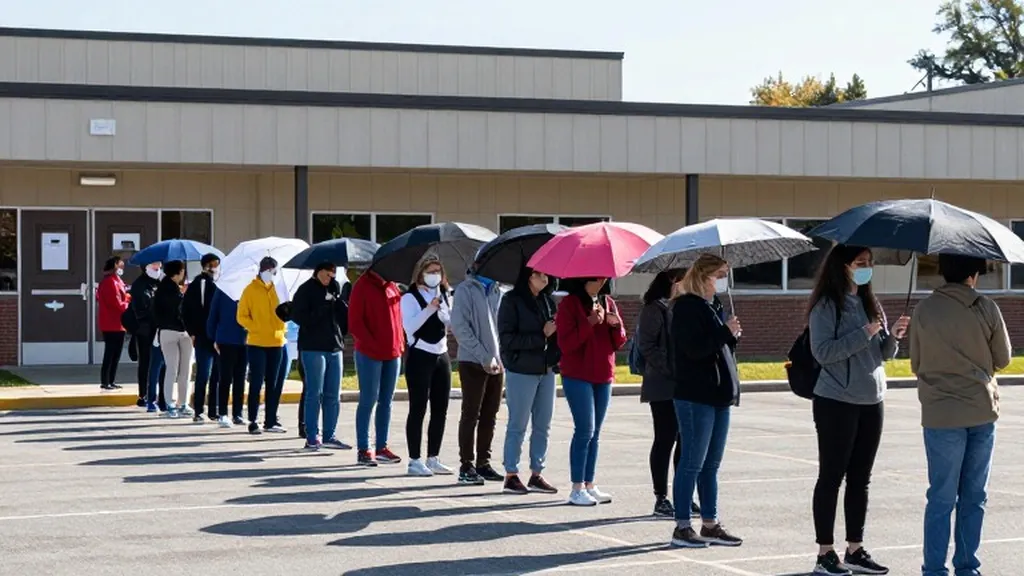
Election Day has arrived for the midterm contests that will determine who controls Congress for the final two years of President Donald Trump's second term. With polls open across the country, the outcome will define the balance of power in Washington and influence the legislative and oversight agenda for the remainder of the administration. The Associated Press describes the election as a referendum on Trump's second term, noting that voters are struggling with high prices and are angry over an unpopular war with Iran. This context sets the stage for a decision that could significantly alter the trajectory of the administration's remaining years.
In the House of Representatives, all 435 seats are up for grabs. Republicans currently hold 218 seats, while Democrats hold 214, with one independent and some vacancies. Democrats need a net gain of three districts to secure a majority, whereas Republicans can lose no more than two seats to maintain control. Ballotpedia identifies 46 battleground districts, with 25 held by Democrats and 21 by Republicans. The control of this chamber is critical because a Democratic majority would likely trigger investigations and possible impeachment proceedings, a prospect that has been a central theme in the campaign.
If Democrats win the House, House Democratic Leader Hakeem Jeffries would become the first Black speaker. He has outlined a 100-day agenda focused on the cost of living and oversight of the executive branch. This agenda would immediately put pressure on the administration to justify its policies and spending. Republicans, who have been bracing for the possibility of losing the House, are fighting to hold the Senate to prevent a divided government. The Associated Press notes that one or two seats could tip either chamber, making the final vote counts in key districts and states essential to the final outcome.
The Senate race involves 35 seats, including 33 regular elections and two special elections for the terms of Marco Rubio in Florida and JD Vance in Ohio. Republicans hold 53 seats, while Democrats hold 45, plus two independents who caucus with Democrats. Democrats need a net gain of four seats for a majority, while Republicans can only afford to lose two. The control of the Senate will determine the confirmation of nominees, including judges and cabinet-level officials. A Republican majority would allow the administration to continue filling vacancies without significant obstruction, while a Democratic majority could stall key appointments and scrutinize executive actions more closely.
Several Senate races are considered competitive and could determine the overall balance of power. In Georgia, Senator Jon Ossoff is running against Republican Representative Mike Collins. In Ohio, Democratic former Senator Sherrod Brown is challenging Republican Senator Jon Husted. In Michigan, Republican former Representative Mike Rogers is competing against Democrat Abdul El-Sayed. The Associated Press notes that economic strain and tariffs have made states like Maine competitive, where Senator Susan Collins is facing Democratic former state Senate President Troy Jackson. These matchups highlight the national mood, with voters weighing the cost of living against their support for the administration's policies.
The Associated Press and NORC polling indicates that 35 percent of U.S. adults approve of Trump's job performance, while 25 percent approve of his handling of the economy. About seven in 10 respondents say the country is heading in the wrong direction. Most blame the president for high prices, a sentiment that is driving voter turnout. More than 57 million people had already voted as of Monday, surpassing the early vote totals of four years ago in many closely watched states. This high level of participation suggests that voters are engaged and motivated to express their views on the administration's performance.
Republican National Committee Chairman Joe Gruters stated that everything depends on turnout, asserting that if they turn out their voters, they will win. Conversely, Democratic Congressional Campaign Committee Chair Representative Suzan DelBene said the American people are angry and want change. These statements reflect the strategies of both parties as they mobilize their bases. Republicans have been trying to beat the typical midterm pattern, where a president's party almost always loses seats, by using redistricting. However, new districts in states like Florida and elsewhere may not vote as drawn, adding uncertainty to the final tally.
The outcome of the election will also have implications for the 2028 presidential race. A strong Democratic night would boost potential candidates such as Gavin Newsom, JB Pritzker, and Pete Buttigieg. It could also complicate the path for Vice President JD Vance, who is seen as a key figure in the Republican party. The control of Congress will influence the legislative priorities of the next two years, including tax policy, spending bills, and oversight investigations. Voters are making their choices today with an eye on both the immediate impact on their lives and the long-term direction of the country.
The Associated Press notes that the 2026 elections are likely to be the most expensive in history. Republican committees outraised and outspent Democratic committees, helped by Trump-affiliated groups and Elon Musk. At the candidate level, however, Democrats outraised their opponents. The spending reflects the high stakes of the race, with both parties investing heavily in advertising and ground games. The results will provide a clear signal of voter sentiment on key issues such as the economy, the war with Iran, and the administration's overall performance.
As polls close across the country, the focus shifts to the counting of votes and the final determination of who controls each chamber. The Associated Press notes that the results could add to investor concerns about AI spending and debt ceiling negotiations, indicating the broader economic impact of the political outcome. The next two years will be defined by the balance of power in Congress, with the potential for significant legislative action or gridlock depending on the final numbers. Voters in all 50 states are casting their ballots today to decide this critical question.