Voters focus on prices and tariffs as midterm polls open
AP-NORC data shows economic anxiety driving turnout, with specific voter anecdotes from Raleigh and Palm Beach illustrating the cost-of-living pressure.
By Ayanda Kaminski ·
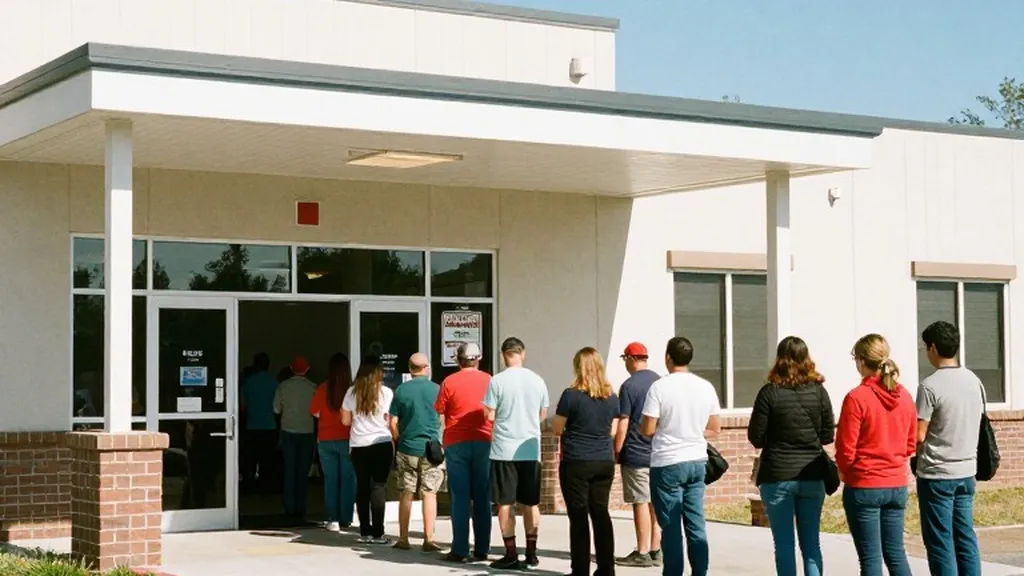
Election Day has arrived for the 2026 midterm elections, a decisive moment for the composition of the United States Congress during the final two years of President Donald Trump's second term. All 435 seats in the House of Representatives are up for grabs, along with 35 Senate seats and 36 governorships. The outcome will determine which party holds the balance of power in the legislative branch, directly impacting the ability to enact, block, or investigate legislation for the remainder of the presidential term.
According to data from the Associated Press and NORC, the economy has emerged as the central issue for voters across the country. The AP-NORC polling indicates that 35 percent of U.S. adults approve of Trump's job performance, while only 25 percent approve of his handling of the economy. Furthermore, approximately seven in ten adults say the country is heading in the wrong direction. A significant majority of those surveyed blame the president for high prices, a sentiment that appears to be influencing voter behavior in both swing and solidly partisan districts.
The financial strain on American households is vividly captured in statements from individual voters in key battleground states. In Raleigh, North Carolina, James Moore, a 57-year-old librarian, expressed frustration with the rising cost of living. He noted that he is paying more taxes, more for healthcare, and more for everything else. His comments reflect the broader economic anxiety that the AP describes as a defining feature of this election cycle, where voters are struggling with high prices and are angry over an unpopular war with Iran.
In contrast, voters in areas that strongly supported the president in the previous cycle are showing a different level of satisfaction. Mark Barker of Palm Beach Gardens, Florida, stated that he has been following Trump the whole time and believes the president is doing an awesome job. This divergence in sentiment highlights the geographic and economic split that is shaping the 2026 electorate. While some voters remain loyal to the incumbent's agenda, others are prioritizing immediate financial relief and oversight of the federal government.
The stakes for the House of Representatives are particularly high. Republicans currently hold 218 seats, while Democrats hold 214, with one independent and several vacancies. Democrats need a net gain of three districts to secure a majority, whereas Republicans can afford to lose no more than two. Ballotpedia counts 46 battleground districts, with 21 of the Democratic-held districts having voted for Trump in 2024. This shift suggests that economic concerns may be overriding traditional partisan alignment in these competitive areas.
In the Senate, 35 seats are on the ballot, including 33 regular elections and two special elections. Republicans hold 53 seats, and Democrats hold 45, with two independents caucusing with the minority. Democrats require a net gain of four seats to take control, while Republicans can lose only two. The AP notes that one or two seats could tip either chamber, making every vote in the 13 identified Senate battlegrounds critical. Races in states such as Kansas, Georgia, and North Carolina are seen as pivotal to the final tally.
North Carolina is a focal point for Senate control, featuring a contest between Democratic former Governor Roy Cooper and Republican Michael Whatley. The state's open Senate seat is being filled after Thom Tillis retired, a decision made following a public clash with President Trump. In the same state, the new congressional maps resulting from mid-decade redistricting are adding another layer of complexity. Six states, including North Carolina, are using new maps, which may alter the traditional voting patterns in certain districts.
The governor's races also present a significant opportunity for the Democrats. They currently hold 24 governorships, while Republicans hold 26. In the 36 states holding elections, each party holds 18 seats. Democrats would need a net gain of two governorships to achieve a nationwide majority, a feat they have not accomplished since 2010. The AP identifies Alaska, Arizona, Georgia, Iowa, Kansas, Michigan, Nevada, Ohio, and Wisconsin as the key battlegrounds for state-level executive power.
Campaign spending for the 2026 elections is projected to be the highest in history. Republican committees outraised and outspent their Democratic counterparts, aided by Trump-affiliated groups and Elon Musk. However, at the candidate level, Democrats outraised their opponents. An analysis of AdImpact data by the AP shows that 88.1 percent of Republican general election TV ad spending went to states and districts that Trump won in 2024. This strategic focus indicates an effort to consolidate support in areas that already lean toward the president's party.
Voter turnout is a critical variable in this election. More than 57 million people had already voted by Monday, surpassing the early vote totals from four years ago in many closely watched states. RNC Chairman Joe Gruters emphasized that everything depends on turnout, stating that if they turn out their voters, they win. Conversely, DCCC Chair Rep. Suzan DelBene said the American people are angry and want change. The difference in mobilization between the two parties could determine the final outcome in close races.
The Associated Press describes the election as a referendum on Trump's second term, with voters weighing the cost of living against the promise of continued conservative governance. The AP-NORC poll is one of many indicators, but it aligns with the broader narrative of economic dissatisfaction. As polls close across the country, the focus remains on whether voters will prioritize the immediate impact of prices and tariffs over long-term political loyalty. The results will set the stage for the final two years of the current administration and the next cycle of governance.