Scientists Detect Heme and Cell Structures in 115-Million-Year-Old Dinosaur Bone
Researchers identify what appear to be preserved red blood cells in an Aratasaurus specimen, a finding that challenges standard assumptions about fossil degradation.
By Ayanda Kaminski ·
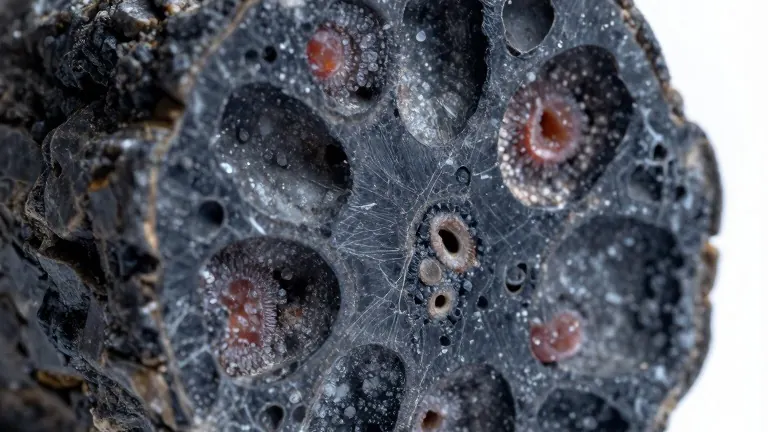
A research team led by Prof Kliti Grice at Curtin University has identified structures resembling red blood cells within the hind leg bones of an Aratasaurus. The small meat-eating dinosaur lived in what is now north-eastern Brazil approximately 115 million years ago. Grice states that the discovery represents the first time fossilised red blood cells with heme-related chemistry have been found in situ in a dinosaur.
The Aratasaurus remains were originally excavated from a mine in 2008. They have been kept in the National Museum of Brazil where the research team conducted their analysis. Using electron microscopes, the scientists observed small round structures located in fine channels that once held blood vessels. Chemical tests further confirmed the presence of heme, the organic compound that enables hemoglobin to transport oxygen. The analysis also detected amino acid building blocks for collagen, a protein found in connective tissues.
The presence of these biological markers in a fossil of this age is unusual. Biological tissues typically degrade rapidly, often leaving little to no trace in ancient specimens. If the findings are confirmed, they could allow scientists to study dinosaur blood composition, metabolic rates, and activity levels. Grice described the discovery as a mineral and molecular echo of the animal's original biology. The full study is published in Proceedings of the National Academy of Sciences.
The team suggests that a manganese compound called hausmannite aided in the preservation process. This mineral formed in and around the blood cells, potentially stabilizing them before complete fossilization. Grice noted that the same mechanism may have helped preserve the amino acids associated with collagen. This chemical stabilization offers a potential explanation for how such delicate organic materials survived millions of years of geological pressure and time.
Other experts in the field have reacted to the results with a mix of interest and caution. Prof Mary Schweitzer of North Carolina State University, who has previously identified soft tissues in dinosaur fossils, questions whether the structures are truly red blood cells. She points out that dinosaur red blood cells should possess a nuclear bulge that gives them a dome-like shape on both sides. The structures identified by Grice are concave, which Schweitzer argues suggests they may be different types of cells.
Schweitzer acknowledged the significance of the heme and collagen findings. She stated that the conventional wisdom in palaeontology regarding the disappearance of endogenous organics within a million years is being challenged. She added that technological approaches to palaeontological specimens are becoming more routine, which will continue to test these long-held assumptions about fossil preservation.
Grice cautioned that the work does not imply that large biological molecules like proteins or DNA survive in ancient fossils. She emphasized the need for extraordinary analytical evidence for extraordinary claims. The primary aim of the research is to determine how much genuine molecular information deep time can preserve rather than searching for specific genetic material. Grice noted that the goal is not to find Jurassic Park DNA but to understand the limits of molecular survival.
The findings suggest that museum collections worldwide may contain other biological materials waiting to be discovered. Grice indicated that extraordinary molecular information may already be present in old fossils. The research team plans to apply these new analytical techniques to other specimens to test the extent of this preservation. The study provides a new baseline for evaluating the organic content of ancient fossils.
Source: The Guardian