
FDA Red 3 Ban Forces Candy Makers to Reformulate by January 2027
The agency revoked approval for the dye after lab studies linked high doses to cancer in male rats, affecting staples like candy corn and Hot Tamales.
By Ayanda Kaminski ·
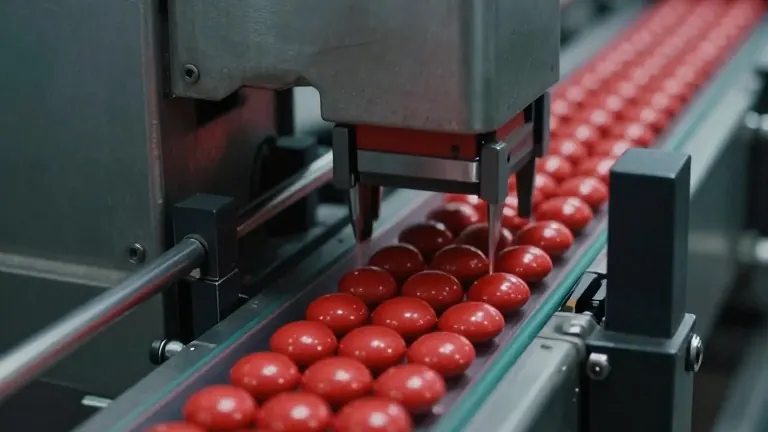
Shoppers will see fewer red-dyed treats on shelves by mid-2027 as the Food and Drug Administration enforces a nationwide ban on Red Dye No. 3. The agency revoked the additive's approval on Jan. 15, 2025, giving manufacturers 24 months to reformulate their products. This deadline impacts Halloween staples such as candy corn, Hot Tamales, and PEZ, potentially marking the end of an era for these specific flavor profiles.
The FDA action followed laboratory studies where high doses of the dye caused cancer in male rats. The agency clarified that there is no current evidence showing the same effect in humans. This federal move came approximately 15 months after California signed its own crackdown on additives. Gov. Patrick Morrisey of West Virginia signed a separate, more sweeping dye ban on March 24, 2025. That state law will take effect on Jan. 1, 2028, and restricts seven specific synthetic colors, including Red 3, Red 40, and Blue 1.
The regulatory path has been uneven across the country. West Virginia’s new law covers a wide palette of colors, effectively targeting a large portion of the candy aisle. However, the industry is testing these limits in court. The International Association of Color Manufacturers sued West Virginia in October 2025, arguing the state law is unconstitutional. Meanwhile, California’s 2023 ban, which took effect in 2027, focused on four specific additives found in popular snacks and drinks.
The removal of Red 3 is one of several recent changes in the confectionery market. Other bans have targeted ingredients or packaging structures rather than just color. In 2022, the European Union banned titanium dioxide, a white coloring used to enhance the brightness of candies like Skittles. The U.S. FDA still permits this additive, creating a divergence in product formulations between North American and European markets.
Safety concerns beyond ingredients have also driven removals. In 2001, the FDA issued an import alert for mini jelly cups made with konjac. These bite-size gels did not melt like traditional gelatin and were linked to the deaths of six children in the United States. The European Union and Australia went further by banning the products entirely due to the choking hazard.
Some familiar candies have returned after being pulled from shelves. Red M&M’s disappeared in 1976 when the FDA banned Red Dye No. 2. Mars Inc. removed the red candies to reassure shoppers, even though the product did not contain the banned dye. The red color returned in 1987. Other products, like the Kinder Surprise egg, have faced structural barriers. A 1938 federal law prohibits candy with non-nutritive objects embedded inside, a rule that applies to the toy-filled chocolate egg but not to Kinder Joy, which separates the toy in a sealed half.
Manufacturers must now adjust recipes to meet the January 2027 deadline for Red 3. Customs agents continue to seize Kinder Surprise eggs at the border under the existing 1938 statute. The result is a patchwork of availability where a candy sold legally in one state or country may be restricted in another based on specific additive lists or packaging designs.
Source: WERE
More Business · Business Complaints · Report a business · Got a Story?