Serbia Faces 90-Day Deadline to Build New Government After Student List Win
The leaderless movement holds 141 seats but must navigate constitutional timers while dismantling institutions loyal to the ousted 14-year ruler.
By Ayanda Kaminski ·
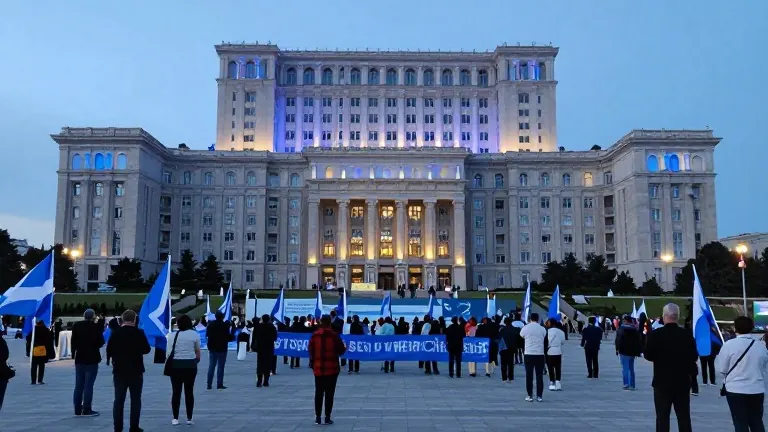
Serbian citizens now face a strict constitutional timeline to establish a new executive branch, with the 250-seat parliament required to convene within 30 days and form a government within 90 days. The Student List, a leaderless coalition of students, academics, and farmers, won 53% of the vote, securing 141 seats. Aleksandar Vučić’s Serbian Progressive Party took 39% and 103 seats, ending a 14-year hold on power that began after the 2012 elections.
The movement lacks a single figurehead or traditional hierarchy, which complicates the appointment of a prime minister and cabinet. Ilija Srdanović, a cardiologist, headed the candidate list. Dejan Šoškić, a former central bank governor, and Radomir Saičić, a chemistry professor at Belgrade University, emerged as prominent voices. The group operates on collective decision-making, a structure that observers note slowed their candidate selection process over several months.
The new administration inherits a state apparatus staffed by civil servants loyal to the previous regime. Vučić’s tenure was marked by control over media, judiciary, and state institutions. The Student List’s platform includes purging police officers linked to organized crime and creating an independent police unit accountable to prosecutors rather than the interior ministry. It also seeks to ban party loyalist appointments to state-owned companies and subject major infrastructure contracts to independent public scrutiny.
Ana Mirković, a university educationist and candidate, described the mandate as a debt to the public rather than a gain of privilege. She stated the first priority is the social and psychological detoxification of the country. The movement aims to dismantle a system of intimidation by opening up the media and ending pressure on public-sector workers. Mirković emphasized full disclosure of all contracts and financial flows to prevent future state capture.
Foreign policy remained a secondary focus for the campaign. The Kremlin expressed hope on Monday that the new leaders understand cooperation with Russia is in Serbia’s interests. Dušan Vučićević, an analyst, noted the movement insisted on addressing domestic issues first. He compared the win to Péter Magyar’s Tisza party in Hungary, which ended Viktor Orbán’s rule earlier this year, though he questioned if the student model would work elsewhere.
Vučić conceded defeat late Sunday, blaming the loss on support for his opponents from European countries and the US deep state. International leaders responded positively. German Chancellor Friedrich Merz said Berlin would actively support Serbia’s European path. Ukrainian President Volodymyr Zelenskyy called it a new chapter and thanked Serbia for respecting its independence.
The country must also hold new presidential elections before 27 December, as Vučić stepped down from the presidency to run for prime minister. Nikola Burazer, programme director at the Centre for Contemporary Politics, said the movement’s decision-making process must speed up. He noted that while the victory seemed like a fantasy 24 hours ago, the focus now shifts to how the government will look.
Source: The Guardian