US Envoy Backs Damascus Control of Suwayda Against Israeli Backed Groups
Special envoy Tom Barrack’s recent remarks signal a split between Washington and Israel over the future of Syria’s southern governorate.
By Natalie Castro ·
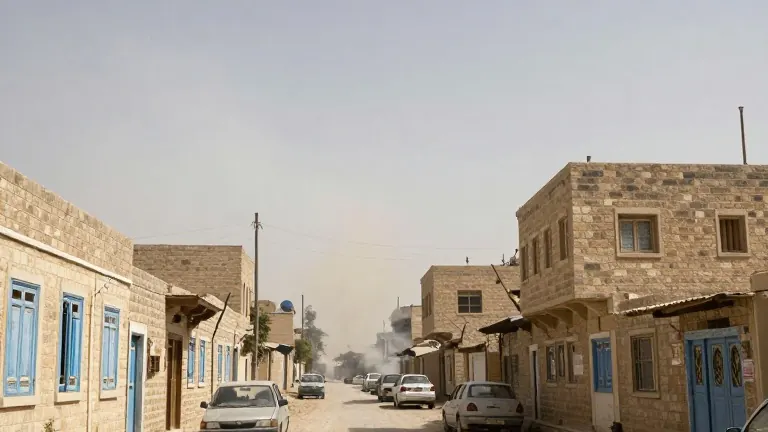
US Special Envoy Tom Barrack told an Australian social media personality on Friday that Washington prefers the Syrian government to hold control over the southern governorate of Suwayda. Barrack, who also serves as US ambassador to Turkiye, identified a specific local leader as a point of friction. He referred to a Druze sheikh, believed to be Hikmat al-Hijri, whose National Guard has been accused of receiving Israeli support. The envoy’s comments suggest the US wants the central government in Damascus to manage the region rather than a local faction linked to Israel.
Suwayda is a majority Druze area that has remained outside full government control since the fall of President Bashar al-Assad in December 2024. The province has become a focal point for tension between the new leadership and Israel. Israel has conducted airstrikes on Syrian ministries and soldiers while attempting to build relationships with the Druze community. The National Guard, aligned with al-Hijri, is widely viewed by critics as a proxy for Israeli interests in the south.
Navvar Saban, a researcher at the Arab Center for Contemporary Syrian Studies, said Barrack’s message was clear to regional observers. Saban noted that Israeli backing for al-Hijri does not equate to American support. He explained that Washington has prioritized an agreement with Damascus, allowing Israel to maintain its own separate security demands. This distinction marks a shift in how the US approaches stability in a country rebuilding after 13 years of war.
The divergence in policy reflects the differing views of US President Donald Trump and Israeli Prime Minister Benjamin Netanyahu. Trump has cultivated a strong relationship with Syrian President Ahmed al-Sharaa. Netanyahu, conversely, views the new government with skepticism following Israel’s invasion of Quneitra governorate and other strategic areas after the Assad collapse. Israeli forces have threatened the Damascus government, bombed the Ministry of Defence, and arrested Syrians in the south, drawing sharp criticism from Syrian officials.
Nanar Hawach, a Syrian analyst who visited Suwayda in September, said the remarks expose clear differences between Washington and Israel. Hawach argued that the US is building a partner in Damascus while Israel prefers a government weak enough to rely on Israeli protection. She stated that Israel uses Suwayda as a lever against Damascus, providing enough support to keep the province dependent but not enough to secure its future.
The conflict in Suwayda escalated in July 2025 when fighting between Bedouin tribes and Druze residents turned into deadly sectarian killings. Casualties were overwhelmingly Druze, and Israel intervened by attacking Syrian government forces entering the province. Since then, al-Hijri has positioned himself as a counterweight to the new leadership. His authority rises when the community feels threatened, making him a difficult political opponent for Damascus.
A trilateral agreement signed in Amman in September 2025 called for an independent international commission to investigate the July 2025 events. The deal required that perpetrators be brought to justice. However, the situation remains in a deadlock as trust between residents and the central government has not recovered. Residents feel the pressure of government reassertion through salaries and school exams.
Saban said a durable settlement requires credible accountability for the 2025 violence. The Druze community needs guarantees for movement, education, and security. He added that neither weakening al-Hijri nor restoring government institutions alone will rebuild trust in the region.
Source: Al Jazeera