Orbital Ambitions: SpaceX Earnings Trigger Massive Wall Street Repricing
A record-breaking quarter and aggressive AI infrastructure plans led analysts to sharply raise price targets for the aerospace and connectivity giant.
By Natalie Castro ·
SpaceX has fundamentally altered its financial trajectory, prompting a swift and substantial revaluation by Wall Street following the release of its third-quarter 2026 results. The company’s performance far exceeded market expectations, leading to a wave of price target increases that signal a new era of aggressive growth and profitability for the firm.
The financial metrics underscore the magnitude of this shift. Revenue surged to $14.6 billion, marking a 161 percent year-over-year increase that comfortably surpassed the consensus estimate of approximately $12.7 billion. More significantly, the company swung from a net loss in the prior year to a net profit of $4.4 billion. Adjusted EBITDA reached $8.8 billion, indicating a robust operational engine that is now scaling rapidly across its diverse business units.
The primary driver of this revenue explosion was the Super Intelligence division, which generated roughly $7.6 billion in quarterly sales. This segment, which saw growth of nearly 830 percent year-over-year, has now become the company’s largest revenue contributor. The Connectivity segment also performed strongly, delivering $5.2 billion in revenue as subscriber additions pushed the consumer base for Starlink to 13.6 million users.
Leadership played a pivotal role in cementing investor confidence during the earnings call. CEO Elon Musk and CFO Bret Johnsen provided forward-looking guidance that significantly outstripped analyst models. They outlined revenue projections for the first quarter of 2027 between $33 billion and $37 billion, a figure far above the roughly $22 billion that Wall Street had previously anticipated. This optimism was paired with a commitment to heavy capital expenditure, with plans for $35 billion to $40 billion in spending during the fourth quarter, primarily focused on AI compute infrastructure.
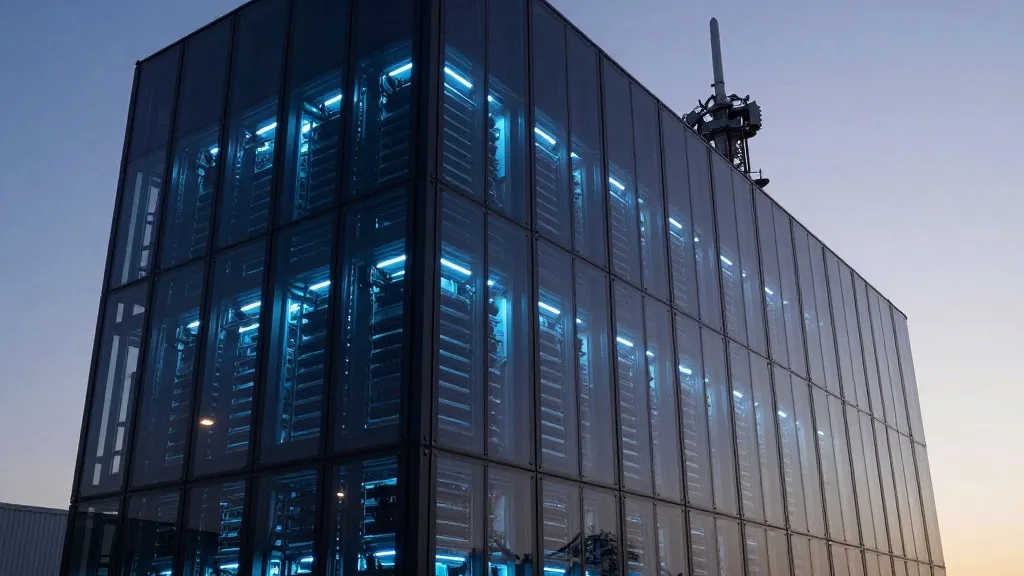
The focus on artificial intelligence is becoming central to the company’s identity. Management is targeting 2.5 to 3 gigawatts of nameplate compute capacity by the end of the current year, with pathways identified to reach 13 gigawatts or more by the end of 2027. Musk noted relentless demand from hyperscalers and other customers, stating that current compute pricing supports payback periods of less than a year, with some scenarios suggesting a turnaround in as little as six months. Key sites for this infrastructure expansion include Memphis and Southaven.
Beyond the AI push, the company highlighted significant milestones in its traditional aerospace and connectivity operations. Starship achieved a recent orbital success and deployed V3 satellites, while Starlink continued to show momentum in enterprise pricing and adoption. The rapid uptake of Grok Bot and plans for spectrum expansion were also noted as positive indicators for the company’s broader technology ecosystem.
A particularly notable development discussed during the call was the formation of special committees to explore a possible combination with Tesla. This strategic move suggests a deeper integration of the two entities’ technological and operational capabilities, further fueling speculation about the long-term structure of the Musk-led enterprise.
The market responded immediately to these developments. Shares, which closed at $147.79 on October 20, jumped approximately 8 percent in early premarket trading on October 21. Analysts moved quickly to adjust their valuations, with JPMorgan more than doubling its target to $500 from $240. Other major firms, including Cantor Fitzgerald, Barclays, and Morgan Stanley, also raised their targets, with the latter holding an Overweight rating at $300.
Firms such as Citi, UBS, TD Cowen, Wells Fargo, and Clear Street all increased their price targets, ranging from $224 to $274. The consensus view is that the strong quarterly print, combined with the accelerating expansion of AI compute and progress in Starlink and Starship, justifies a higher long-term valuation. While the elevated spending on infrastructure remains a point of focus, the overall sentiment reflects greater conviction in SpaceX’s trajectory across launch, connectivity, and its burgeoning intelligence business.
Source: Teslarati · original report published
More Business · Business Complaints · Report a business · Got a Story?