NASA Restructures Lunar Budget Strategy to Cut Orion Docking Costs
The agency has revised its Artemis architecture to simplify orbital maneuvers and eliminate complex refueling steps, aiming to secure a 2028 surface landing.
By Marcus Johnson ·
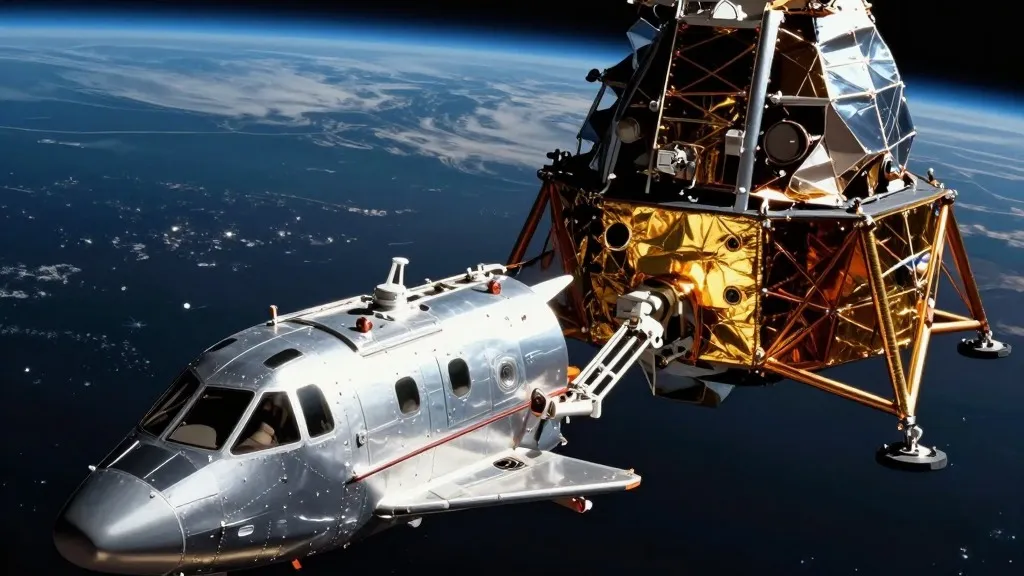
NASA has officially detailed a revised operational framework for its lunar return program, signaling a shift toward a more cost-efficient and mechanically simplified approach to landing astronauts on the Moon. Announced during a comprehensive briefing on Friday, the updated plans confirm that the agency remains on track to attempt a crewed lunar surface descent as early as 2028. This strategic adjustment marks the first time the space agency has publicly laid out the specific architectural changes that underpin its timeline, effectively closing the chapter on previous, more complex docking protocols.
The most significant financial and logistical alteration involves the interaction between SpaceX’s Starship vehicle and the Orion spacecraft. Under the new protocol, Orion will no longer be required to rendezvous with the Starship lunar lander in a complex near-rectilinear halo orbit around the Moon. Instead, the two vehicles will dock in high-Earth orbit before beginning their transit to the lunar surface. This change directly addresses the highest priority request from SpaceX engineers during their early 2026 meetings with NASA, who had argued that the previous halo orbit docking requirement demanded excessive energy and introduced unnecessary technical difficulties.
A parallel simplification has been applied to the architecture involving Blue Origin. The revised plan for the company’s New Glenn rocket now mandates four separate launches to assemble the mission stack, but it eliminates the requirement for spacecraft-to-spacecraft refueling in orbit. This reduction in complexity is designed to accelerate the development timeline and reduce the risk profile associated with in-space propellant transfer. Furthermore, the new architecture allows for a potential rendezvous between Blue Origin’s Blue Moon lander and the Orion spacecraft in low-Lunar orbit, offering greater flexibility in mission execution.
These structural changes were largely necessitated by the earlier cancellation of the Lunar Gateway project. By removing the Gateway from the critical path, NASA effectively solved the orbital mechanics problem that had plagued the SpaceX integration. The agency now anticipates launching the Artemis III mission, a demonstration flight involving docking with both the Blue Moon and Starship vehicles near Earth, by the summer of 2027. The subsequent Artemis IV mission, which will involve the actual crewed landing on the lunar surface, is still targeted for a 2028 launch.
NASA Administrator Jared Isaacman expressed confidence in the agency’s ability to meet these milestones, citing strong stakeholder support and adequate resources. "This is an achievable path we are on right now," Isaacman stated during the presentation. "We have the mandate, we have the resources, and the support from our stakeholders to be able to execute, and that’s what we intend to do." His comments reflect a broader institutional effort to streamline decision-making and remove bureaucratic hurdles that have historically delayed major space infrastructure projects.
The leadership team has conducted a thorough review of every element within the Artemis Program, seeking to identify areas where modifications can help the contracted lander companies execute their plans more efficiently. This proactive approach to problem-solving is intended to accelerate the overall program while maintaining the core objective of returning humans to the lunar surface. The recent clarifications provide a clearer picture of the technical and financial commitments required from both the government and its private partners.
Despite the optimistic outlook, questions remain regarding the agency's ability to hold to the proposed dates. The space sector is known for its volatility, and while the new architecture removes significant technical bottlenecks, the sheer scale of the undertaking continues to pose challenges. The next few years will be critical in determining whether the simplified plans translate into tangible progress on the ground and in orbit.
By aligning its requirements more closely with the capabilities and preferences of its commercial partners, NASA aims to reduce friction in the supply chain. The elimination of complex orbital maneuvers and in-space refueling represents a move toward a more traditional, albeit still advanced, launch architecture. This strategy is expected to lower the overall cost of the program and reduce the technical risk associated with the critical landing phases.
The updated roadmap provides a clearer basis for budget planning and resource allocation for the remainder of the decade. As the agency moves forward with the Artemis III demonstration in 2027, the success of the docking maneuvers in high-Earth orbit will serve as a key indicator of whether the 2028 landing target remains viable. Stakeholders and investors are closely watching these developments to assess the long-term viability of the commercial lunar economy.
Ultimately, the revised plans reflect a pragmatic adjustment to the original vision, prioritizing execution over architectural perfection. By focusing on the most achievable path forward, NASA hopes to ensure that the next step in human space exploration is not just a technical success, but a sustainable business model for future missions beyond the Moon.
Source: Ars Technica