Ukrainian Drone Makers: AI Cuts Decision Time to Microseconds
Yaroslav Azhnyuk, a former Silicon Valley tech founder, says autonomous guidance on the Lupynis TFL-1 drone allows military units to engage targets with speed that human pilots cannot match.
By Sophie Costa ·
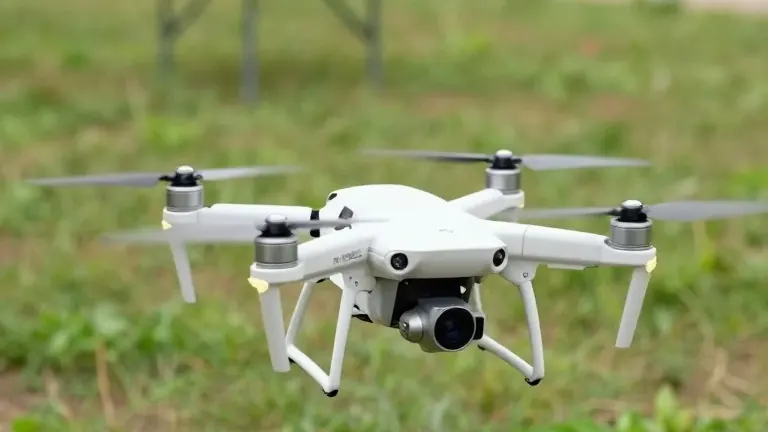
Yaroslav Azhnyuk, a 37-year-old computer scientist, says artificial intelligence is giving Ukraine a decisive edge in the war against Russia. Azhnyuk founded Petcube, a company that sold one million AI-powered pet cameras in the United States, before pivoting to defense after the 2022 invasion. He now leads The Fourth Law and Odd Systems, two Kyiv-based firms that produce autonomous drones for the Ukrainian military. Dozens of military units already operate the Lupynis-10-TFL-1, a first-person-view drone equipped with an onboard computer that takes over control during the final 500 meters of flight.
The technology addresses a specific tactical problem: speed. Azhnyuk notes that human reaction times range from minutes to days, while AI systems can process data and execute maneuvers in microseconds. "When the other side has orders of magnitudes higher capabilities, it gives you an asymmetric advantage," Azhnyuk stated. "It can make you 10,000 times more effective." The drone’s microcomputer runs a deep-learning neural network trained on hours of combat footage to identify vehicles, tanks, and airborne objects.
During a test conducted in an overgrown field outside Kyiv, a pilot identified a dilapidated car driven by an employee. After the system locked onto the target, indicated by a red flash, the pilot released the control stick. The drone navigated to the vehicle autonomously. Stab, the head of the test and integration team at The Fourth Law, described the system as difficult to jam compared to traditional drones. He emphasized that human operators still select the initial target, providing a safeguard against the drone operating without human intent.
The naming convention for the drone reflects a cultural commitment. The Fourth Law named its weapons after Ukrainian intellectuals and artists persecuted by Russia in the 20th century. The Lupynis TFL-1 honors Anatoliy Lupynis, a poet and political activist who endured Soviet imprisonment. Azhnyuk said the company aims to resurrect the legacy of these figures through their continued use in combat.
President Volodymyr Zelenskyy has warned that AI could lead to autonomous battlefield decisions as early as next year. Azhnyuk acknowledged this concern but compared the debate over AI to the historical debate over fire or steel. "Any kind of tool can be used for good or for bad," he said. "And in the end, it's the human that decides how to use that tool." He argued that refusing to use AI defensively while the enemy uses it offensively would result in a loss.
The current system is distinct from the large-scale AI models used in data centers or self-driving cars. Azhnyuk described the drone’s AI as a simple image recognition tool that enables autonomous navigation or target selection. He clarified that the technology is not yet a killer robot, comparing it to a calculator rather than a complex autonomous entity. The system relies on specific software to maintain course and identify threats without constant human input.
Azhnyuk stated that the primary goal is survival. "If Ukraine loses, there's no way for us to argue about the ethics of AI," he said. The company continues to test the Lupynis TFL-1 daily, refining the neural network to recognize more complex targets. The transition from consumer tech to military hardware represents a rapid adaptation for Ukrainian entrepreneurs responding to immediate combat needs.
Source: WCBE
More Business · Business Complaints · Report a business · Got a Story?