Mecca Alliance Delegates Meet in Tehran to Address Houthi Strikes
Officials from Saudi Arabia, Pakistan, and Turkey are negotiating with Iran to halt missile attacks on Saudi infrastructure, with talks occurring against the backdrop of a closed Strait of Hormuz.
By Ayanda Kaminski ·
Thirteen people were killed and more than 300 wounded when Houthi rebels struck King Khalid International Airport in Riyadh earlier this month. The attack occurred while the Strait of Hormuz remained closed, a waterway that typically carries one-fifth of global oil and gas flows.
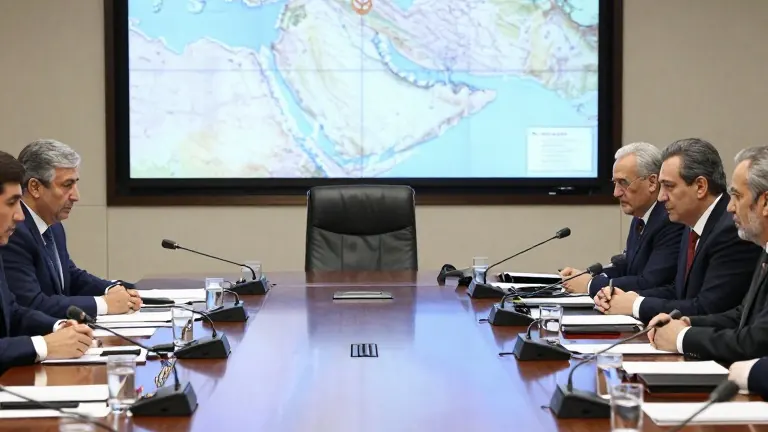
In response to the escalating violence, representatives from the Mecca Defense Alliance gathered in Tehran on October 26. The alliance is a mutual-defense pact binding Saudi Arabia, Pakistan, and Turkey. The group met with Iranian officials to seek a resolution to the conflict, which has intensified since the start of the US-Iran war.
A senior security official in Islamabad stated that the primary objective of the meeting was to persuade Iran to use its influence over the Houthis to stop attacks on Saudi Arabia. The official indicated that the alliance was prepared to propose closer Saudi-Israeli security cooperation as a negotiating lever. This potential shift could require Saudi Arabia to join the Abraham Accords, a 2020 agreement that normalized relations between Israel and several Arab states including the UAE and Bahrain.
"The key question is why Iran should comply? The answer is that Saudi Arabia may ask for support from Israel and that will potentially require them to join the Abraham Accords," the Islamabad official said. The official noted that while Iran might accept this arrangement to stop the Houthis, it is unlikely to soften its stance in broader negotiations with the United States.
Azaz Syed, an analyst based in Islamabad, described the Tehran meeting as a final attempt to secure a negotiated settlement. He pointed to the recent visit of Pakistani Army Chief Asim Munir to Tehran, where he reportedly delivered a final warning to the Iranian government. "The three partners will ask for an end to Houthi attacks, of course, but the key message is the broader settlement," Syed said.
Hamidreza Azizi of the International Crisis Group said the immediate priority is preventing the war between Iran and the US from resuming. The timing of the talks suggests regional leaders are concerned that diplomatic efforts are running out of time. The Houthis have targeted Saudi airports and oil infrastructure, prompting Saudi Arabia to launch strikes on targets in Yemen.
Tensions between Iran and Pakistan have also risen recently. Islamabad closed two border crossings between Baluchistan and Iran’s Sistan-Baluchistan Province and suspended operating clearance for Mahan Air. In reaction, Iran halted the export of Liquified Petroleum Gas to Pakistan, a move that caused domestic gas prices to rise. Pakistan imports approximately 7,000 metric tons of LPG daily from Iran.
Source: RFE/RL