
Eisenkot Coalition Holds Four-Seat Lead in Final Israeli Polls
With 7.3 million eligible voters casting ballots Tuesday, the race for the Knesset remains tight as exit polls begin to shape the next government.
By Ayanda Kaminski ·
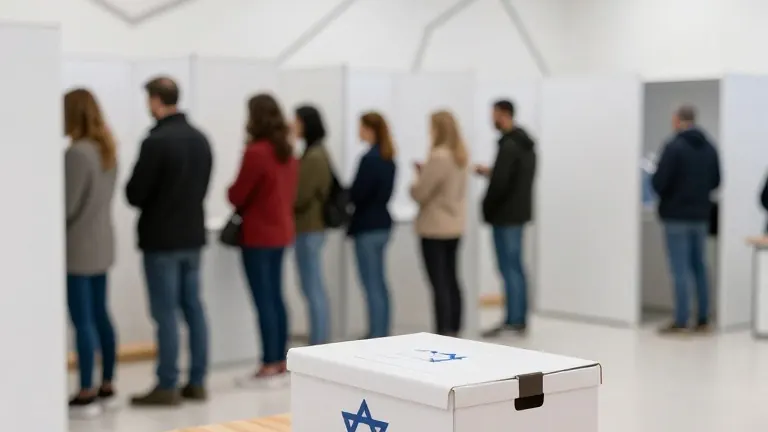
Former military chief of staff Gadi Eisenkot leads the opposition bloc by four seats in the average of the three major Israeli news channels, according to data compiled by Haaretz. This margin places his coalition at 54 seats while Prime Minister Benjamin Netanyahu’s bloc is projected to win 50. The Knesset holds 120 seats in total, meaning a party or coalition needs 61 to secure a majority and form a government.
More than 7.3 million citizens are eligible to cast ballots in this election, the first since the Hamas attack on October 7, 2023. This count includes 1.2 million Palestinian citizens of Israel. The voting process began at 7:00 a.m. local time on Tuesday and concludes at 10:00 p.m. Israelis residing abroad cannot participate in this vote because the country does not offer a general absentee ballot system. Voters must be physically present at their polling stations on election day.
The electoral system in Israel operates on proportional representation. Voters choose a single party rather than individual candidates. The number of seats a party receives is directly linked to its share of the national vote. For a party to enter the Knesset, it must secure at least 3.25 percent of the total vote. About a dozen parties are expected to cross this threshold, which complicates the final seat allocation and coalition building.
Exit polls will be broadcast by news channels shortly after polls close on Tuesday. While initial indications may appear within a few hours, a clear picture of the results could take days or weeks to emerge. The Central Elections Committee website will provide live results as they are tallied. The final vote count is expected by Friday, and official results will be formally published on November 4, one week after the election.
President Isaac Herzog will determine who receives the mandate to form a government once the final count is complete. He will consult with party leaders to identify the candidate with the best chance of success. The nominated leader then has 42 days to assemble a governing coalition. Since no single party has ever won an outright majority in Israel, governments are formed through negotiations among multiple parties. These talks often extend over several weeks.
If the current prime minister or his rivals fail to form a government, the existing cabinet will continue as a caretaker administration. Alternatively, the party with the most votes may attempt to form a minority government or negotiate a power-sharing arrangement with another political leader. If all negotiations fail to produce a workable government, the country will have to return to the polls for new elections.
Source: Al Jazeera