20,000 Units: Microduck Robots Surge Ahead of Holiday Season
Nvidia-backed robotic ducks have become the top pre-order item for Christmas, driven by viral executive appearances and open-source customization features.
By Natalia Campos ·
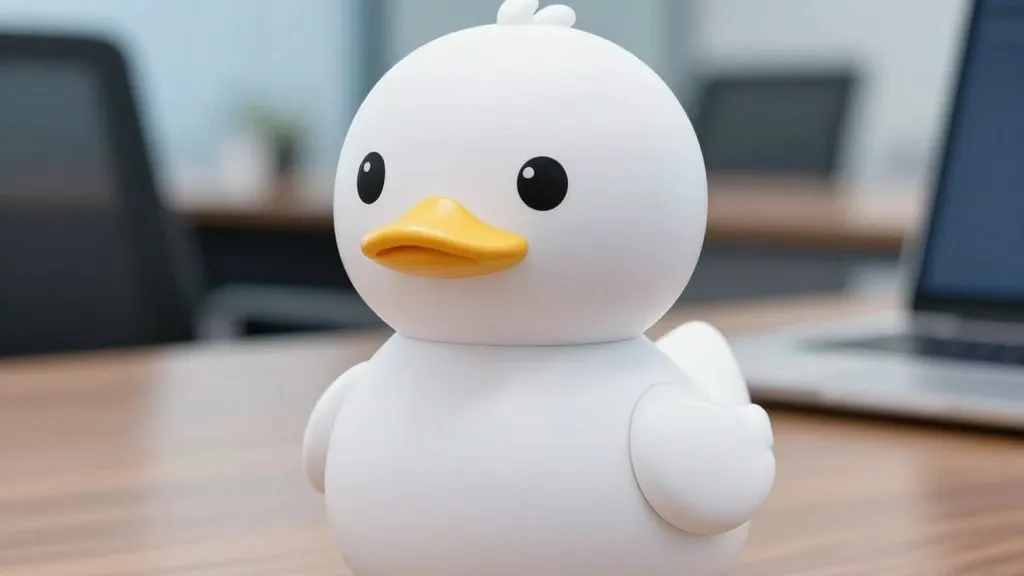
For consumers looking to the holiday season, the market for electronic gifts has shifted sharply toward interactive robotics. The immediate change for shoppers is the emergence of a new category of affordable, programmable companions that have already secured a significant share of the pre-holiday demand. The Microduck, a small, open-source robot, has moved from a tech curiosity to a commercial success, with preorder figures climbing to 20,000 units within days of a high-profile demonstration. This rapid uptake suggests a potential shift in what families and adults consider the primary toy of the year, moving beyond traditional video games and physical board games into the realm of autonomous hardware.
The surge in interest was catalyzed during Nvidia’s GTC Berlin conference earlier this month. CEO Jensen Huang was filmed interacting with a group of these robots during his keynote address. The video, which circulated widely on social media, showed the devices executing basic behaviors such as sitting, standing, and performing somersaults upon voice commands. The robots also emitted small, robotic sounds reminiscent of science fiction characters and engaged in a programmed 'nap' sequence where they would collapse to the ground. This visual demonstration proved to be a powerful marketing tool, converting online viewers into buyers almost immediately.
The timeline of this product’s rise is tightly linked to recent corporate acquisitions in the artificial intelligence sector. The Microduck is manufactured by Pollen Robotics, a company that was acquired by Hugging Face in 2025. In September of this year, Nvidia purchased Hugging Face, thereby bringing Pollen Robotics and its robotic inventory under the umbrella of the GPU giant. This is not Hugging Face’s first foray into physical robotics; the company previously released the Reachy Mini, another compact robotic device. The integration of these assets into Nvidia’s ecosystem has allowed for a streamlined development path, leveraging existing technological infrastructure to bring new hardware to market.
From a technical standpoint, the Microduck utilizes Nvidia’s proprietary technology stack for its initial training. The robots are not simply pre-programmed with fixed loops; instead, they are trained using simulations where they learn fundamental movements like walking and standing. This open-source nature is a key differentiator in the market. Owners are not locked into a single set of behaviors. The community can train their specific units to perform new tricks and then share those updates with other users, creating a growing library of capabilities that extends the product’s lifespan beyond its initial release.
Market analysts and the company’s leadership, including Hugging Face’s Clem Delangue, have noted that the demographic for these devices may be broader than just children. Promotional materials and user-generated content show adults engaging with the robots, suggesting a market for hobbyists and tech enthusiasts who value the open-source architecture. Delangue has predicted that the Microduck could become the best-selling robot of the year, a claim that gains weight given the speed at which preorders accumulated following the GTC event.
Logistics for the holiday rush are already in motion. Manufacturers and distributors are preparing to ship the 20,000 pre-ordered units in time for Christmas delivery. This timing is critical, as it places the Microduck in direct competition with other major holiday toys. The fact that the product gained traction through an executive’s casual interaction rather than a traditional advertising campaign highlights the current state of tech marketing, where viral moments drive sales velocity more effectively than traditional media buys.
The success of the Microduck also arrives during a period of mixed sentiment in the AI industry. While recent weeks have been marked by concerns over AI involvement in various cyberattacks, the Microduck serves as a tangible, positive demonstration of the technology’s potential. It provides a counter-narrative to the more serious implications of AI deployment, offering consumers a fun, accessible entry point into the robotics space. For the business desk, this represents a notable convergence of hardware manufacturing, software development, and consumer marketing that could define the next phase of the AI hardware market.
Source: TechCrunch