Federal Wildlife Officials Approve Larger Boundary for Okefenokee Refuge as Mining Decision Looms
The U.S. Fish and Wildlife Service has finalized a plan adding 22,000 acres to the Okefenokee refuge's acquisition boundary, opening the door to land purchases near a proposed titanium mine site.
By Jayden Sweiler ·
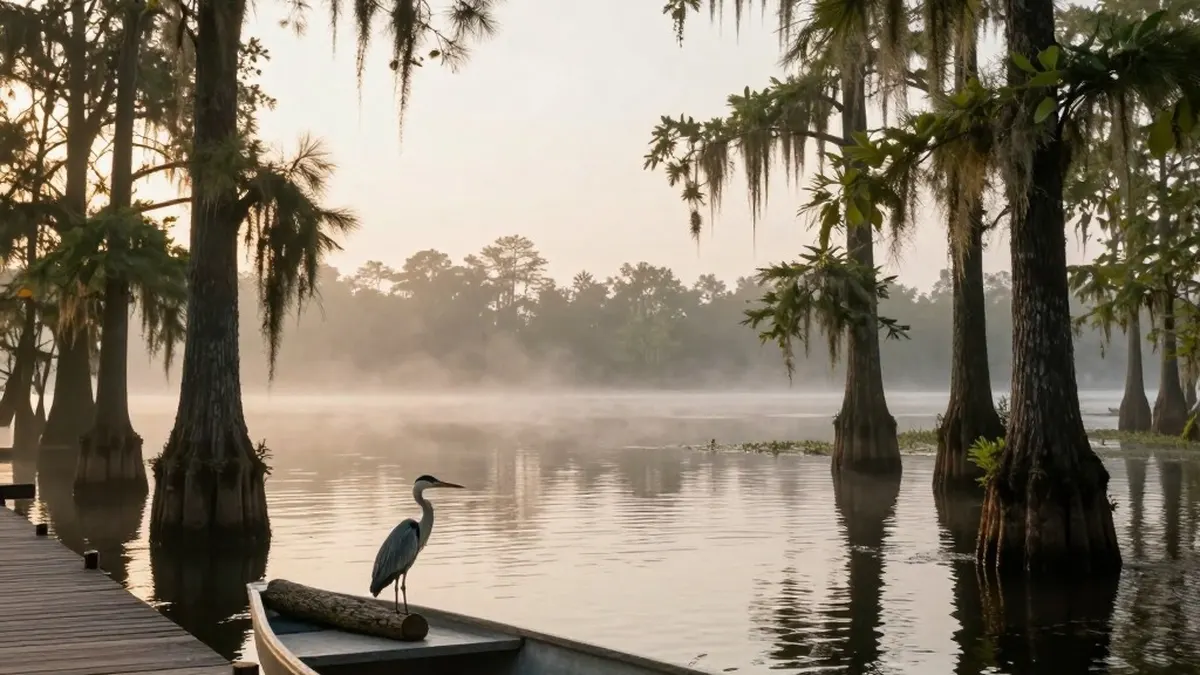
The U.S. Fish and Wildlife Service announced Friday that it has finalized a plan that could lead to a larger Okefenokee National Wildlife Refuge in southeast Georgia.
Under the approved plan, 22,000 acres would be added to the refuge's "acquisition boundary." The agency, which manages the 407,000-acre refuge, said the change includes a one-mile "fuel reduction zone" ringing the swamp. The buffer is meant to keep wildfires that occur in the swamp from spreading into the commercial timberlands that surround it.
The new boundary does not put any land into the refuge right away. Instead, it gives the agency authority to negotiate with neighboring landowners about buying their property or putting other conservation measures in place.
The decision arrives while Alabama-based Twin Pines Minerals awaits a ruling from Georgia regulators on whether it may mine for titanium near the refuge. The Okefenokee is the largest intact blackwater swamp in North America and shelters many threatened species. Twin Pines maintains its mine would not damage the swamp, but many independent scientists disagree, and thousands of Georgians have voiced opposition at public hearings and at the State Capitol.
The federal government also said last month that it would nominate the refuge as a United Nations World Heritage site.
The Fish and Wildlife Service said a larger boundary could help protect the swamp's hydrological integrity, provide habitat for the gopher tortoise, lessen the effects of wildfires and create openings for longleaf pine restoration that would benefit the red-cockaded woodpecker.
Some of the added acreage lies near the swamp's southeast corner and is owned by Twin Pines. The company wants to mine titanium sands on a 600-acre portion of Trail Ridge, a line of mineral-rich dunes along the swamp's eastern edge.
Even with the expansion, tens of thousands of acres of Trail Ridge remain privately held and could, in theory, attract other mining interests. Some members of the public and conservationists had urged the government to pursue an even larger area. Earlier attempts by large corporations to mine near the swamp over the years have been stopped.
Josh Marks, president of the advocacy group Georgians for the Okefenokee, called the expanded boundary "a critical development in the drive to protect the Okefenokee Swamp from mining." Marks said he fought DuPont's large strip-mining proposal in the 1990s and helped bring part of that company's property into the refuge, and that land acquisition has played, and must keep playing, a vital role in safeguarding the resource.
Marks urged Gov. Brian Kemp to deny the permits Twin Pines is seeking. Kemp's office has consistently referred questions to the Georgia Environmental Protection Division, which is weighing the company's permit applications.
Source: The Atlanta Journal-Constitution